Showing posts with label human body. Show all posts

Wednesday, April 28, 2010

Allergies

Posted by P.SURESH BABU at 3:34 AM 0 comments


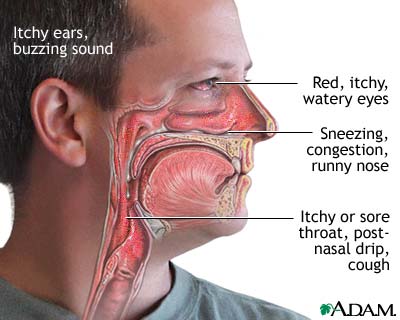
An allergy is any condition in which a person reacts in a hyper­sensitive or unusual manner to any substance or agent. The range of allergies is very broad and people may react to various foods, drugs, dusts, pollens, fabrics, plants, bacteria, animals, heat, sunlight and many other things. Whenever a foreign material invades the tissues, the body reacts to fight against it. The body produces certain materials called antibodies which combine with the foreign material and render it harmless. But should it enter the body a second time, the antibodies are torn away from the body tissues to attack the substance. This causes a chemical substance called histamine to be released, which in turn produce the disorders which are symptoms of an allergy.

In spring and early summer some people suffer from an allergic reaction to certain plants and pollens. This is called hay fever and can give the symptoms of a heavy cold.

Pacemaker

Posted by P.SURESH BABU at 3:07 AM 0 comments


Pacemaker

It is well known to everybody that heart beats automatically. It does not need to be controlled by the brain. Sometimes the heart gets messages that make it change the speed of the beat. It can go faster or slower. These messages can come from special nerve signals. They can also come from harmones carried in the blood. The continuous and regular beatings of the heart is controlled by the pacemaker. The pacemaker lies between the two atria. It is a small group of muscle cells that send out regular electrical signals. These signals make the heart beat regular, that is , about 70 - 80 times a minute in a healthy adult.

Certain heart diseases cause this pacemaker to fail. Under this condition an artificial pacemaker is used to keep the heartbeat regular. An artificial pacemaker is a battery powered electronic device which stimulates the heart and makes it to beat regularly. Some artificial pacemakers are implanted in the chest while others are small enough to be passed along a vein to the heart. The simplest pacemakers keep the heart going at a steady rate of 70 beats per minute. But sometimes it is possible to get the person’s own nervous system to control the pacemaker. In this case the heart can still beat faster or slower according to the need of the body. Battery powered pacemakers can work upto 15 years with just one battery.

Water

Posted by P.SURESH BABU at 2:57 AM 0 comments


Water

Water is absolutely essential to every single form of life. Every living cell – plants and animals alike – depend on this substance. More than half of the human body is made up of water. Much the same time is true of other living things. Without water to drink, human beings would die in a very short time. The reason every living thing needs a certain amount of water is because the cells, the basic units that make up living things, have water molecules in them. Without water these basic units would be very different and of no use to life as we know it. In the course of a day, an adult human being takes in about two quarts in what we call solid foods, such as fruit, vegetables, bread, and meat.

These solid foods are not really dry, since they are thirty to ninety percent water. Besides these three quarts that enter the body from outside, about ten quarts of water pass back and forth within the body between the various organ systems. There are about five quarts of blood in the vessels of the body and three quarts of this is water. And this always remains unchanged. No matter how much water you drink you cannot dilute the blood.

Our sense of thirst is controlled in the brain. When the body requires more water, we experience the sensation of thirst. Usually our mouth and throat become dry – a signal for us to drink more fluids.

Arteries and veins

Posted by P.SURESH BABU at 2:52 AM 0 comments


Arteries and veins are different from one another because they have different parts to play in our blood's circulation. Arteries take blood from the heart to the rest of the body, while veins return it. Blood is pumped from the right side of the heart through the pulmonary artery to the lungs and returns through the pulmonary vein to the left side of the heart. From there it is pumped via the large artery called the aorta to the rest of the body and eventually returns to the right side of the heart again through the veins known as the inferior vena cava, from the legs and abdomen, and superior vena cava, from the head neck and arms.

Blood is forced through the arteries in spurts at high pressure, so their walls are thick and flexible and expand with every pulse of blood. In the veins, blood pressure is low and the blood flow is steadier. The walls of veins are thin and collapsible and valves prevent the blood flowing back in the wrong direction. In general, the arteries lie deep within the body, and the veins nearer the surface, which is why the blood vessels we see on our hands, for instance, appear blue in colour as they contain blood that has lost most of its oxygen and is therefore blue.

BLOOD

Posted by P.SURESH BABU at 2:46 AM 0 comments


BLOOD

Our blood is red because of the substance, haemoglobin, which is contained in our red blood cells (red corpuscles).The function of these specialised cells is to carry oxygen from our lungs to wherever it is needed in the body. They are formed in our bone marrow and the haemoglobin in them

, which is made of iron and protein, becomes redder as it picks up oxygen. It loses this colour as it deposits oxygen in other cells and picks up carbon dioxide to carry back to the lungs, which is why some of the blood vessels in our hands and arms appear blue through our skin.

As well as carrying oxygen and carbon dioxide, the blood carries nutrients to the cells, so that they can perform their functions, and for cell repair and growth. Waste products are carried back to the liver for removal. As well as the red cells, our blood also carries white blood cells, which help to fight off disease. All of the heart cells and nutrients are carried in a pale yellow, thick liquid which is called plasma. The other materials carried in the plasma include a substance called fibrinogen, which helps the blood to clot when we cut ourselves.

Showing posts with label human body. Show all posts

Wednesday, April 28, 2010

Allergies


An allergy is any condition in which a person reacts in a hyper­sensitive or unusual manner to any substance or agent. The range of allergies is very broad and people may react to various foods, drugs, dusts, pollens, fabrics, plants, bacteria, animals, heat, sunlight and many other things. Whenever a foreign material invades the tissues, the body reacts to fight against it. The body produces certain materials called antibodies which combine with the foreign material and render it harmless. But should it enter the body a second time, the antibodies are torn away from the body tissues to attack the substance. This causes a chemical substance called histamine to be released, which in turn produce the disorders which are symptoms of an allergy.

In spring and early summer some people suffer from an allergic reaction to certain plants and pollens. This is called hay fever and can give the symptoms of a heavy cold.

Pacemaker


Pacemaker

It is well known to everybody that heart beats automatically. It does not need to be controlled by the brain. Sometimes the heart gets messages that make it change the speed of the beat. It can go faster or slower. These messages can come from special nerve signals. They can also come from harmones carried in the blood. The continuous and regular beatings of the heart is controlled by the pacemaker. The pacemaker lies between the two atria. It is a small group of muscle cells that send out regular electrical signals. These signals make the heart beat regular, that is , about 70 - 80 times a minute in a healthy adult.

Certain heart diseases cause this pacemaker to fail. Under this condition an artificial pacemaker is used to keep the heartbeat regular. An artificial pacemaker is a battery powered electronic device which stimulates the heart and makes it to beat regularly. Some artificial pacemakers are implanted in the chest while others are small enough to be passed along a vein to the heart. The simplest pacemakers keep the heart going at a steady rate of 70 beats per minute. But sometimes it is possible to get the person’s own nervous system to control the pacemaker. In this case the heart can still beat faster or slower according to the need of the body. Battery powered pacemakers can work upto 15 years with just one battery.

Water


Water

Water is absolutely essential to every single form of life. Every living cell – plants and animals alike – depend on this substance. More than half of the human body is made up of water. Much the same time is true of other living things. Without water to drink, human beings would die in a very short time. The reason every living thing needs a certain amount of water is because the cells, the basic units that make up living things, have water molecules in them. Without water these basic units would be very different and of no use to life as we know it. In the course of a day, an adult human being takes in about two quarts in what we call solid foods, such as fruit, vegetables, bread, and meat.

These solid foods are not really dry, since they are thirty to ninety percent water. Besides these three quarts that enter the body from outside, about ten quarts of water pass back and forth within the body between the various organ systems. There are about five quarts of blood in the vessels of the body and three quarts of this is water. And this always remains unchanged. No matter how much water you drink you cannot dilute the blood.

Our sense of thirst is controlled in the brain. When the body requires more water, we experience the sensation of thirst. Usually our mouth and throat become dry – a signal for us to drink more fluids.

Arteries and veins


Arteries and veins are different from one another because they have different parts to play in our blood's circulation. Arteries take blood from the heart to the rest of the body, while veins return it. Blood is pumped from the right side of the heart through the pulmonary artery to the lungs and returns through the pulmonary vein to the left side of the heart. From there it is pumped via the large artery called the aorta to the rest of the body and eventually returns to the right side of the heart again through the veins known as the inferior vena cava, from the legs and abdomen, and superior vena cava, from the head neck and arms.

Blood is forced through the arteries in spurts at high pressure, so their walls are thick and flexible and expand with every pulse of blood. In the veins, blood pressure is low and the blood flow is steadier. The walls of veins are thin and collapsible and valves prevent the blood flowing back in the wrong direction. In general, the arteries lie deep within the body, and the veins nearer the surface, which is why the blood vessels we see on our hands, for instance, appear blue in colour as they contain blood that has lost most of its oxygen and is therefore blue.

BLOOD


BLOOD

Our blood is red because of the substance, haemoglobin, which is contained in our red blood cells (red corpuscles).The function of these specialised cells is to carry oxygen from our lungs to wherever it is needed in the body. They are formed in our bone marrow and the haemoglobin in them

, which is made of iron and protein, becomes redder as it picks up oxygen. It loses this colour as it deposits oxygen in other cells and picks up carbon dioxide to carry back to the lungs, which is why some of the blood vessels in our hands and arms appear blue through our skin.

As well as carrying oxygen and carbon dioxide, the blood carries nutrients to the cells, so that they can perform their functions, and for cell repair and growth. Waste products are carried back to the liver for removal. As well as the red cells, our blood also carries white blood cells, which help to fight off disease. All of the heart cells and nutrients are carried in a pale yellow, thick liquid which is called plasma. The other materials carried in the plasma include a substance called fibrinogen, which helps the blood to clot when we cut ourselves.


INFINITE INFO Copyright 2009 Reflection Designed by Ipiet Templates Image by Tadpole's Notez | Blogger Template | Blogger Templates | Distributed by Blogger